
Marguerite Duras
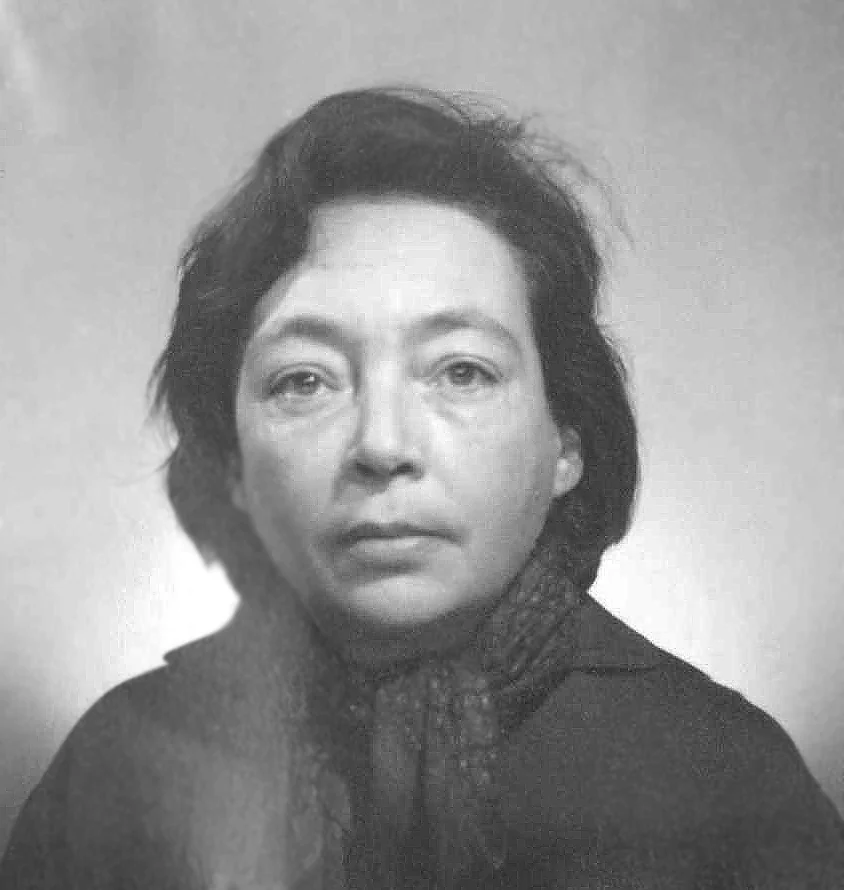
Image from Wikipedia
Image from Wikipedia
Marguerite Duras: The Radical Voice Between Literature, Film, and Memory
An author who shaped an entire era with language, silence, and images
Marguerite Duras was one of the most prominent French intellectuals of the 20th century. Born on April 4, 1914, in Gia Định near Saigon in what was then French Indochina, and passed away on March 3, 1996, in Paris, she was born under her given name Marguerite Donnadieu and later became world-famous under the pen name Duras. Her work encompasses novels, plays, screenplays, and films; she became particularly well-known internationally for the screenplay of Hiroshima, mon amour from 1959. ([britannica.com](https://www.britannica.com/biography/Marguerite-Duras?utm_source=openai))
To understand Marguerite Duras, one must read her as a border crosser: between memory and invention, between autobiography and fiction, between literature and film. Her language is renowned for its simplicity, its ellipses, and the deliberate leaving open of meanings. It is precisely from this arises the tension that makes her work so distinctive to this day. ([de.wikipedia.org](https://de.wikipedia.org/wiki/Marguerite_Duras?utm_source=openai))
Childhood in Indochina: Heritage as Literary Motor
The early years in Vietnam formed the emotional backdrop of her later literature. The childhood experience in colonial Indochina, the sensations of landscape, heat, social distance, and familial insecurity became a defining reservoir for motifs, places, and inner conflicts. In hindsight, this heritage for Duras does not appear as mere biography but as an aesthetic source from which she continuously developed new forms of memory and desire. ([de.wikipedia.org](https://de.wikipedia.org/wiki/Marguerite_Duras?utm_source=openai))
That she took the name Duras from her father's family estate already points to the central principle of her work: identity is never static for her, but always shaped by language, place, and narrative. This tension between personal history and literary construction constitutes a significant part of her authority. ([de.wikipedia.org](https://de.wikipedia.org/wiki/Marguerite_Duras?utm_source=openai))
The Rise to Literary Greatness
Duras initially established herself as a writer and soon became a key figure in post-war French literature. Her texts moved fluidly between novels, essays, plays, and experimental prose, closely related to the French modern movement. The LA Times noted in the mid-1980s that she reached a special kind of immortality in France. ([latimes.com](https://www.latimes.com/archives/la-xpm-1985-04-21-ca-13108-story.html?utm_source=openai))
Her literary profile thrived on condensation rather than embellishment. The sentences often appear reduced, almost sparse, yet gain enormous emotional weight through this very quality. This aesthetic linked her with a consistent quest for the unspeakable, for that which remains beneath the surface in relationships, memory, and power dynamics. ([de.wikipedia.org](https://de.wikipedia.org/wiki/Marguerite_Duras?utm_source=openai))
Film, Screenplays, and Directing: Expanding Her Artistic Universe
Worldwide recognition came with her screenplay for Hiroshima, mon amour, a seminal work in European cinema. Later, she also wrote the screenplay for India Song and turned to directing in the 1970s and early 1980s. With films like Le Camion and Les enfants, she not only adapted her texts to film but also developed a distinctive visual style. ([britannica.com](https://www.britannica.com/biography/Marguerite-Duras?utm_source=openai))
Particularly interesting is that Duras saw directing as a response to the often unsatisfactory adaptations of her prose. For her, film was not merely illustration but another art form in which silence, gaps, and repetition play a similarly central role as in writing. This made her one of the few authors whose work has profoundly transformed both literature and cinema. ([fr.wikipedia.org](https://fr.wikipedia.org/wiki/Marguerite_Duras?utm_source=openai))
Style and Poetics: Reduction as Artistic Force
Duras is characterized by a language that seeks simplicity without seeming simplistic. Recurring motifs, fragmentary sentences, insinuations, and breaks create a poetics of openness, where the unsaid becomes almost more important than the articulated. Her texts build tension not through plot but through atmosphere, rhythm, and psychological density. ([de.wikipedia.org](https://de.wikipedia.org/wiki/Marguerite_Duras?utm_source=openai))
This very reduction has secured her impact over decades. Duras wrote against smooth narration and opted for forms that actively involve readers in the construction of meaning. In literary history, she therefore stands alongside the most radical stylists of the 20th century, whose works do not soothe but rather unsettle and resonate. ([kirkusreviews.com](https://www.kirkusreviews.com/book-reviews/marguerite-duras/lamour/?utm_source=openai))
Discography in a Broader Sense: Works, Adaptations, and Cultural Presence
Although Marguerite Duras was not a musician, her oeuvre possesses a remarkable formal closeness to composed cycles: novels, plays, and films appear as interconnected forms. Among the most well-known titles are Hiroshima, mon amour, India Song, Le Camion, Les enfants, and L’Amant. These works not only established her as a literary giant but also as a central figure in modern auteur cinema. ([britannica.com](https://www.britannica.com/biography/Marguerite-Duras?utm_source=openai))
Her cultural presence derives from the constant re-examination of her themes: colonial experience, female desire, memory, loss, and the limits of language. In reception, Duras is often described as an experimental author who was close to the Nouveau Roman and worked with formats that shattered conventional expectations of narrative and dramaturgy. ([kirkusreviews.com](https://www.kirkusreviews.com/book-reviews/marguerite-duras/lamour/?utm_source=openai))
Reception, Influence, and Literary Legacy
Critics have never treated Duras as a comfortable author. Her work polarizes, as it is read either as uncompromisingly modern or as deliberately evasive. It is this very ambivalence that constitutes her greatness: she remains an author who does not provide readers with ready-made answers but rather an aesthetic experience that unfolds only in its echoes. ([kirkusreviews.com](https://www.kirkusreviews.com/book-reviews/marguerite-duras/lamour/?utm_source=openai))
Her influence extends far beyond French literature. Duras shaped a vision of art in which intimacy, distance, and formal rigor interplay. For contemporary readers, she remains compelling because her works not only reflect an era but also continue to show how radical literature can sound when it focuses on the essence. ([ajuntament.barcelona.cat](https://ajuntament.barcelona.cat/lavirreina/sites/default/files/2022-03/MargueriteDuras_eng.pdf?utm_source=openai))
Conclusion: Why Marguerite Duras Continues to Fascinate
Marguerite Duras is one of the rare artists whose work is both intellectually, emotionally, and aesthetically uncompromising. She fused literature and cinema into a distinctive form of storytelling in which memory, desire, and silence play a central role. Engaging with her means encountering not a smooth author, but a radical voice that has significantly expanded modern storytelling. ([britannica.com](https://www.britannica.com/biography/Marguerite-Duras?utm_source=openai))
It is precisely in this lies her enduring appeal: Duras remains an invitation to hear language anew and read images afresh. Her films and books demonstrate how powerful art can become when it does not explain everything but opens spaces for feeling, memory, and interpretation. Discovering her works means experiencing one of the most distinctive voices of European modernity alive in the mind. ([de.wikipedia.org](https://de.wikipedia.org/wiki/Marguerite_Duras?utm_source=openai))
Voices of the Fans
No official profile found.
Official Channels of Marguerite Duras:
- Instagram: no official profile found
- Facebook: no official profile found
- YouTube: no official profile found
- Spotify: no official profile found
- TikTok: no official profile found