
Die Toten Hosen
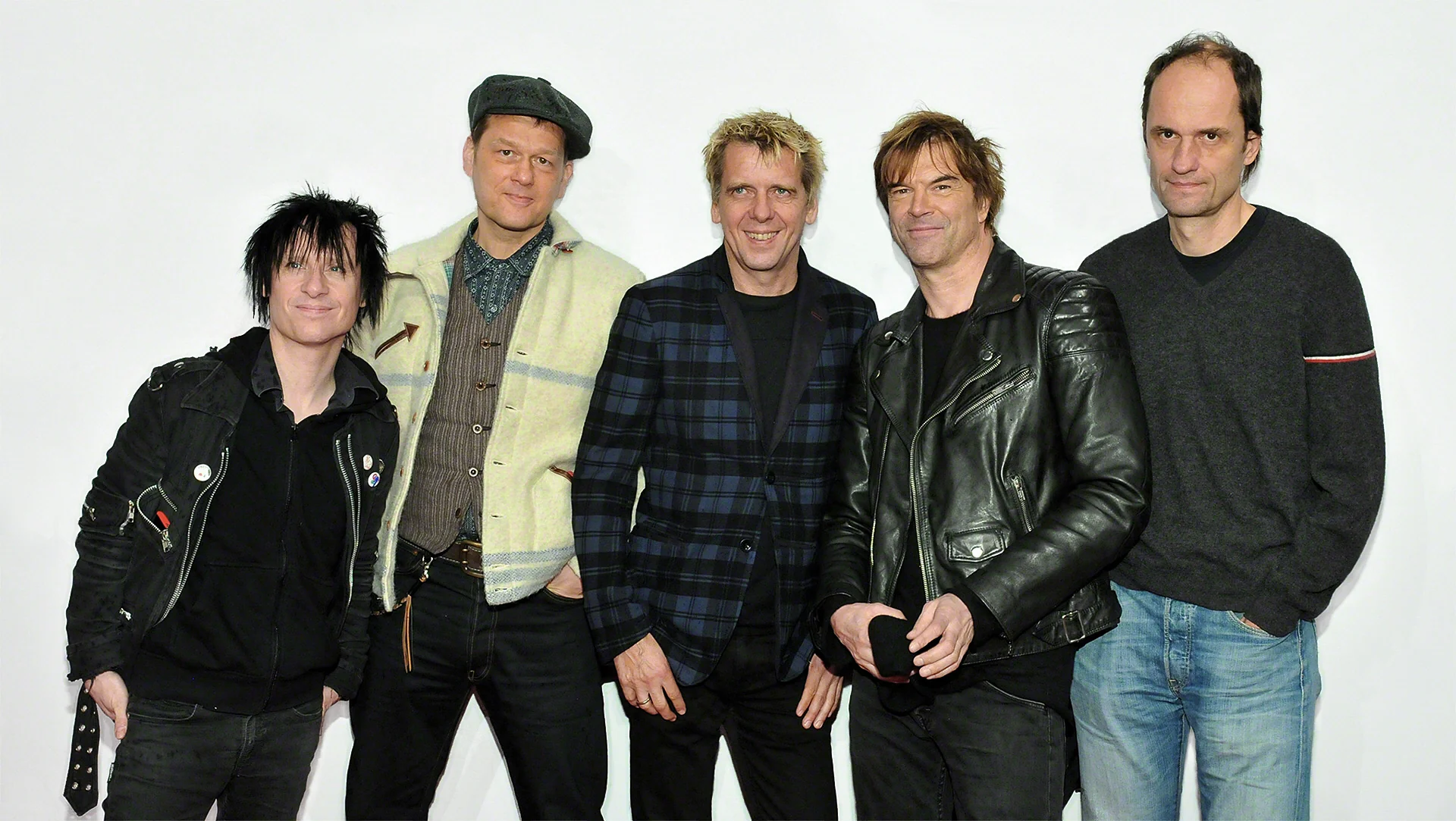
Image from Wikipedia
Image from Wikipedia
Die Toten Hosen – The Indestructible Punk Rock Institution from Düsseldorf
A Band That Came from Punk and Became Part of German Rock History
Die Toten Hosen are among the defining German rock bands of the last four decades. Founded in 1982 in Düsseldorf as part of the German punk movement, the group led by Campino evolved from a relentless underground band to one of the most commercially successful music groups in the country, without losing their core energy. Their repertoire combines German-language rock music with punk rock impulse, clear stance, and a stage presence that emphasizes intimacy, directness, and collective ecstasy. ([en.wikipedia.org](https://en.wikipedia.org/wiki/Die_Toten_Hosen?utm_source=openai))
From Ratinger Hof to Rockstar Status
The band's origins lie in the Düsseldorf underground, in the milieu from which many of the early German-language punk and new wave formations emerged. In official band texts and biographical retrospectives, it becomes clear how much Die Toten Hosen understood their development as a continuous movement between club culture, provincial life, international tours, and growing public recognition. The breakthrough did not come as a sudden break but as a result of a long phase of hard live work, confident production, and consistent songwriting. ([rockhard.de](https://www.rockhard.de/bands/die-toten-hosen?utm_source=openai))
What is particularly notable is that the band focused on independence early on. Even their early releases, the work on their own label Totenkopf, and later the founding of JKP testify to a strong awareness of artistic control, production, and marketing. This independence became a central part of the band's identity and helped Die Toten Hosen assert themselves authentically between punk attitude and mainstream success. ([de.wikipedia.org](https://de.wikipedia.org/wiki/Die_Toten_Hosen/Diskografie))
The Big Breakthrough and the First Phase of International Attention
In retrospect, the phase around the album Ein kleines bisschen Horrorshow and the song "Hier kommt Alex" is considered a decisive turning point, marking the band's breakthrough in 1988. Later, Auf dem Kreuzzug ins Glück became the first studio album by Die Toten Hosen to reach number one in the German album charts. This opened the door to a wider public without the band abandoning their punk rock roots. ([rockhard.de](https://www.rockhard.de/bands/die-toten-hosen?utm_source=openai))
The 1990s then granted Die Toten Hosen the status of a real rock institution. With Auf dem Kreuzzug ins Glück, they achieved rock star status while openly reflecting on the darker sides of this development in their biography. The founding of their own label JKP laid the foundation for an independent career policy, while extensive concerts in Argentina, Australia, and other countries strengthened the band's international reach. ([dth.de](https://www.dth.de/band/biographie))
Musical Development: Punk, Rock, and Surprising Expansions
Die Toten Hosen never stood still stylistically. Although their sound is based on punk rock, over the years elements of rock, pop sensibility, anthemic choruses, and occasionally classical, swing, and sixties influences were added. The album Unsterblich marked a point, according to the band and discography records, where such expansions became clearly visible for the first time. The result is not stylistic dispersal but a broader vocabulary for the same emotional core: attitude, melody, urgency. ([de.wikipedia.org](https://de.wikipedia.org/wiki/Die_Toten_Hosen/Diskografie))
In production, Jon Caffery shaped the band's sound for many years, later Vincent Sorg took over starting with In aller Stille. This continuity in production accounts for part of the recognizable sound of Die Toten Hosen: powerful guitars, sharp rhythms, catchy hooklines, and an aesthetic that translates live energy into the studio. The result is a catalog that works equally well live and on album. ([de.wikipedia.org](https://de.wikipedia.org/wiki/Die_Toten_Hosen/Diskografie))
Discography, Charts, and the Path to Commercial Permanence
By September 2022, the band had released seventeen studio albums, eight live albums, and eight compilations. The discography demonstrates an extraordinary long-term presence: since 1990, Die Toten Hosen have reached number one in the German album charts twelve times, and in Austria, they achieved chart-topping success with Auswärtsspiel for the first time. With over 18 million records sold in total and more than 14.5 million sales solely in Germany, they rank among the most successful acts in the country. ([en.wikipedia.org](https://en.wikipedia.org/wiki/Die_Toten_Hosen?utm_source=openai))
Key albums include Opel-Gang, Unter falscher Flagge, Learning English Lesson One, Opium fürs Volk, Unsterblich, Auswärtsspiel, In aller Stille, Ballast der Republik, and Laune der Natur. Particularly, Opium fürs Volk has been highlighted later as one of the band's most important albums; from this context also comes "Zehn kleine Jägermeister," the group's first number-one hit in the single charts. With this, Die Toten Hosen connected subculture and mass audience in a way that has become rare in the German-language rock scene. ([shop.dietotenhosen.de](https://shop.dietotenhosen.de/index.php/n.19/V2/Shop/index.php/n.18-Alben/l.109-Deluxe-Edition-mit-Bonus-Tracks---Opium-fuers-Volk/?utm_source=openai))
Live Culture, Stage Presence, and Proximity to the Audience
A central feature of Die Toten Hosen is their stage presence. The band has emphasized for decades the importance of live concerts and close contact with the audience. It is here that their special authority lies: not just through studio hits, but especially through marathon tours, collective choruses, and a direct, often very physical concert mode, Die Toten Hosen have earned a reputation as a live band of extraordinary reliability. ([en.wikipedia.org](https://en.wikipedia.org/wiki/Die_Toten_Hosen?utm_source=openai))
Official retrospectives repeatedly highlight how large and emotional the tours have become, particularly in the 2010s around Ballast der Republik and "Tage wie diese". The band describes this phase as "bigger, louder, warmer" and classifies it as one of the most intense chapters of their history. It is here that Die Toten Hosen prove that they do not only deliver songs but build a shared experience: between chorus, sweat, memory, and presence. ([dth.de](https://www.dth.de/band/biographie))
Cultural Influence and Artistic Authority
Die Toten Hosen are more than a successful band; they are a cultural reference point. Their influence extends from the German punk and rock scene through stadium culture to the broader pop discourse. Collaborations with artists such as Wim Wenders, Andreas Gursky, and Klaus Maria Brandauer show that the band has never seen its role solely as musical but always as part of a larger cultural context. ([dth.de](https://www.dth.de/band/biographie))
The music press has accompanied this journey. In a Rolling Stone review of In aller Stille, the music was described as more tightly and offensively organized, while RockHard clearly marked the band's breakthrough with Ein kleines bisschen Horrorshow and "Hier kommt Alex". Such classifications confirm that Die Toten Hosen are not only popular in German rock history but also trendsetting. ([rollingstone.de](https://www.rollingstone.de/reviews/die-toten-hosen-in-aller-stille/?utm_source=openai))
Current Projects and the Next Big Phase
Even in the 2020s, the band remained active and productive. Official biographical entries mention the cover album Learning English Lesson 3: MERSEY BEAT! The Sound of Liverpool, Campino's book Hope Street, the second book Kästner, Kraftwerk, Cock Sparrer, as well as the 40th anniversary of the band with an international concert tour and exhibition. For 2026, the tour motto "Trink aus! Wir müssen gehen" was also announced. ([dth.de](https://www.dth.de/band/biographie))
According to current shop and press information, Die Toten Hosen will release their last regular studio album Trink aus, wir müssen gehen! on May 29, 2026, along with the bonus album Alles muss raus!. As a precursor, the single "Die Show muss weitergehen" was released on March 13, 2026. Stadium and open-air concerts are announced for June 2026, and the demand is so high that numerous dates are already sold out. ([shop.dietotenhosen.de](https://shop.dietotenhosen.de/index.php/n.19-Neu/l.1960-Dreifach-Vinyl-Standard-Edition_-_Trink-aus_-wir-muessen-gehen_-_-Bonusalbum-_Alles-muss-raus/%3Fsrsltid%3DAfmBOorIj3sES5Z2Ic8vrxanufZoXLzE0Fb5Pf_Jud8WfGGqpGteFu84?utm_source=openai))
Conclusion: Why Die Toten Hosen Continue to Fascinate Today
Die Toten Hosen are exciting because they have productively navigated opposites: punk and pop, street energy and stadium size, independence and mass success. Their artistic development tells the story of a band that has maintained a clear identity over decades while continually finding new ways to express that identity audibly. For those wanting to experience German rock history on a grand scale, this is a band that combines attitude, melody, and live power into a rare unity. A concert by Die Toten Hosen is therefore much more than nostalgia: it is lived music culture in the here and now. ([dth.de](https://www.dth.de/band/biographie))
Official Channels of Die Toten Hosen:
- Instagram: https://instagram.com/dietotenhosen_official
- Facebook: https://www.facebook.com/dietotenhosen/
- YouTube: https://www.youtube.com/user/jkplab
- Spotify: https://open.spotify.com/artist/2F8GvYuY0lfZNYu45dY6gJ
- TikTok: no official profile found
- X: https://x.com/dietotenhosen
Sources:
- Die Toten Hosen – Biography - Official Website
- Die Toten Hosen – Shop: Trink aus, wir müssen gehen! - Official Website
- European News Agency – Die Toten Hosen: The Show Must Go On, 14.03.2026
- RockHard – Die Toten Hosen
- Rolling Stone – Review: Die Toten Hosen - In aller Stille
- Wikipedia: Die Toten Hosen
- Wikipedia: Die Toten Hosen/Diskografie
- Band's Linktree – Social Links
Upcoming Events
Die Toten Hosen - Drink Up! - We Have to Go - Tour 2026
Die Toten Hosen in Düsseldorf
Die Toten Hosen – Drink up! We have to go Tour 2026
Die Toten Hosen Open-Air Concert
Die Toten Hosen Concert in Munich
Open-Air Concert with Die Toten Hosen
Die Toten Hosen - Summer Comeback Tour 2026
Open-Air Concert: Die Toten Hosen in Freiburg
The Sound of Düsseldorf