
Dornröschen
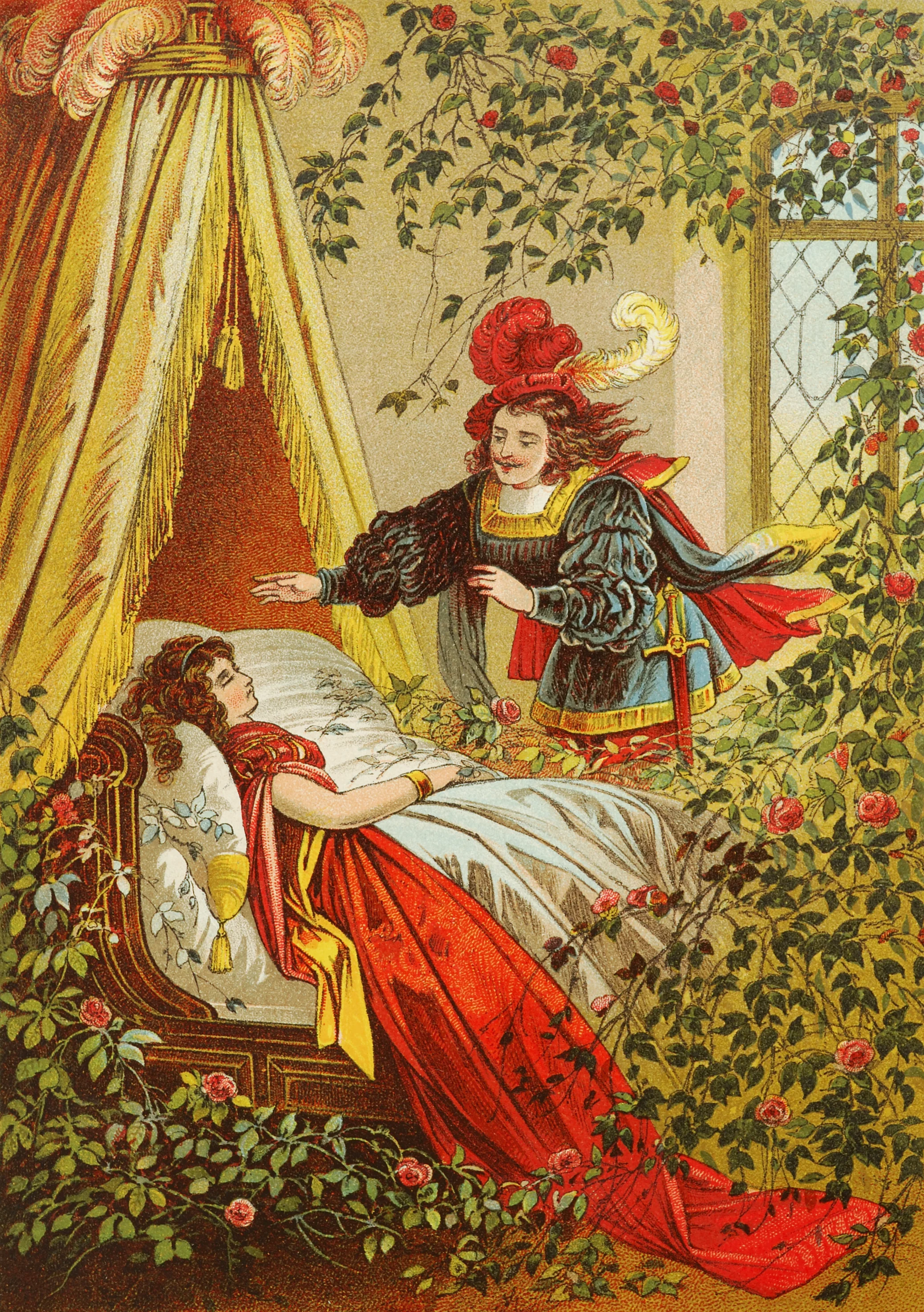
Image from Wikipedia
Image from Wikipedia
Sleeping Beauty – The Fairy Tale of Sleep that Freezes Time
A Timeless Classic of World Literature between Folklore, Romance, and Cultural Radiance
Sleeping Beauty is among the most well-known fairy tales in the European cultural realm and has appeared in the Brothers Grimm's Children's and Household Tales since its first edition in 1812 as KHM 50. The tale is classified as fairy tale type ATU 410 and tells a story of enchantment, sleep, patience, and awakening – motifs that continue to captivate readers, stage artists, and researchers alike today. In the Grimm tradition, the story is not only material for children but also a vivid example of the transformation of an older, orally transmitted narrative motif into a canonical literary form. (gutenberg.org)
Biographical Origins of a Fairy Tale
Unlike an artist biography, Sleeping Beauty does not have life dates but a history of transmission. According to research and the Wikipedia article, the Grimm text traces back through Marie Hassenpflug to Charles Perrault's La belle au bois dormant, which was published in 1697 in Contes de ma Mère l’Oye and had already existed in 1696. Ludwig Bechstein later included the fairy tale as Das Dornröschen in his Deutsches Märchenbuch, thus confirming its lasting popularity in the 19th century. (en.wikipedia.org)
This origin makes Sleeping Beauty a text with a clear cultural biography: French courtly literature, German collection tradition, and oral transmission intertwine. The Brothers Grimm not only transcribed such tales; they placed them within a larger narrative world that oscillated between popular belief, linguistic research, and national identity. It is precisely this uniqueness of the fairy tale that it thrives not on a single author figure but on the condensation of many voices over generations. (britannica.com)
The Breakthrough in the Canon of Children's and Household Tales
The actual cultural breakthrough of Sleeping Beauty occurred with its inclusion in Grimm's Children's and Household Tales. Since 1812, the tale has found its firm place in literary memory and has become one of the defining narratives about sleep, curse, and redemption. The Grimm version continues to shape the German-speaking reception today, even though earlier and parallel variants had already developed the motif. (gutenberg.org)
The popularity of the fairy tale also rests on its clear dramaturgy. A fateful curse, the protective limitation of misfortune, the sleeping court, and ultimately the return of life create a narrative tension that is easily remembered and can be staged anew time and again. It is precisely this structural rigor that makes Sleeping Beauty one of the most enduring themes in European narrative tradition. (grimmstories.com)
Narrative Structure, Symbolism, and Literary Depth
At the center stands the figure of a princess who falls into a deep sleep due to a curse and only awakens much later. The symbolism of the spindle's prick, the hundred years of sleep, and the enclosed world unfolds a powerful imagery that conveys themes of innocence, danger, and maturation. Therefore, Sleeping Beauty is not only a fairy tale but an archetype of waiting and transformation. (childstories.org)
The plot employs contrasts: courtly order against magical misfortune, movement against stillness, life against stagnation. These tensions lend the material a remarkable emotional clarity and explain why the fairy tale has endured in literature, music, ballet, and film for centuries. The Grimm version thus integrates into a larger European tradition that is also visible in Perrault and in older preforms. (en.wikipedia.org)
Musical and Artistic Impact
Although Sleeping Beauty is not a musician but a fairy tale, the material has a pronounced stage and performance history. In opera, ballet, and music theater, the story is continually reinterpreted because it provides strong scenic images: dormitory, thorn hedge, awakening, celebration, and redemption. The fairy tale is thus a prime example of cultural adaptability and the power of a clear narrative in the performing arts. (en.wikipedia.org)
Especially the contrast between static enchantment and final release makes the material attractive for composition and arrangement. The dramaturgy demands musical arcs of tension, delicate instrumentation in the sleep motif, and radiant resolution at the moment of awakening. In this form, Sleeping Beauty repeatedly serves as a template for atmospheric, romantic, and symbolically charged soundscapes. (cambridge.org)
Literary Reception and Cultural Influence
Sleeping Beauty has established itself in cultural memory as a symbol of life that is sleeping and waiting for later fulfillment. The material was internationally disseminated by Charles Perrault and canonized in the German-speaking world by the Brothers Grimm. Ludwig Bechstein's adaptation further illustrates how present and adaptable the fairy tale was in the 19th century. (en.wikipedia.org)
The continued relevance can be explained by the openness of the motif. Sleeping Beauty is at once a narrative image of coming of age, societal stagnation, and the sudden breaking of time. It is this ambiguity that ensures the fairy tale's influence extends far beyond children's literature in cultural history, sparking ongoing discussions in both scholarly and artistic contexts. (en.wikipedia.org)
Why Sleeping Beauty Continues to Fascinate Today
Sleeping Beauty remains captivating because it combines archaic imagery with a timeless dramaturgy. The fairy tale tells of standstill and renewal, of danger and rescue, of enchantment and return – and therein lies its unbroken radiance. Those who rediscover this material encounter not just a children's fairy tale but a profound cultural symbol of hope, transformation, and the power of awakening. (grimmstories.com)
A live experience in the broader sense occurs with every good stage or reading adaptation: then, Sleeping Beauty unfurls its full atmosphere, its poetic weight, and its visually strong beauty. It is precisely for this reason that it is worth encountering this fairy tale anew time and again. It remains a classic that does not age but instead blooms anew with every generation. (en.wikipedia.org)
Official Channels of Sleeping Beauty:
- Instagram: no official profile found
- Facebook: no official profile found
- YouTube: no official profile found
- Spotify: no official profile found
- TikTok: no official profile found