
Ruth Baumgarte
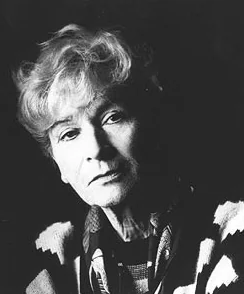
Image from Wikipedia
Image from Wikipedia
Ruth Baumgarte – The Radiant Power of a German Painter Between Portrait, Society, and the Africa Cycle
An Artist Who Translated Life into Color
Ruth Baumgarte is considered one of the most impressive German painters of the 20th century. Her work combines figurative precision with expressive color energy, social observation, and an unmistakable intellectual independence. Born in 1923 in Coburg and passing away in 2013 in Bielefeld, she developed an artistic language that emerged from portraiture into the great themes of contemporary history, identity, and cultural experience.
Baumgarte never worked decoratively, but with purpose. Her paintings compress biography, political awareness, and formal consequence into art that shows humanity in its social context. Particularly, her Africa Cycle gained her international recognition, linking her painting to an intensely colorful, often vibrantly pulsating visual language that garnered significant attention in art criticism.
Early Influences: Background, Education, and Initial Artistic Steps
Ruth Johanna Kellner was born on June 27, 1923, in Coburg, coming from an acting family. Her father Kurt Rupli was a theater director and later head of UFA Productions, while her mother Margarethe Kellner-Conrady was an actress. This early proximity to the stage and performance shaped a sensitivity for gesture, expression, and role models, which later permeated her painting.
As a child, she began painting and drawing. Between 1941 and 1944, she studied painting and free graphics at the Hochschule für bildende Künste Berlin, under the tutelage of Kurt Wehlte among others. She received multiple awards for her exceptional talent. During her studies, she secretly grappled with the persecution and deportation of Roma, Sinti, and Jewish people—a precursor to the moral seriousness of her work.
In 1944, after the evacuation of the university, she transferred to the State School for Industry and Art in Sonneberg. She then initially worked as a press illustrator for the Berliner Zeitung. Even during this phase, she merged observational skills with drawing discipline, creating the foundation for an art that increasingly mediated between individual physiognomy and societal situation.
Portrait Art and the Focus on the Human Being
Baumgarte discovered portraiture as the ideal genre to capture people in a nuanced way. In her early works, one can already observe a strong focus on physiognomy, light handling, and color value. The portrait serves not merely as a reproduction but as a psychological field where character, biography, and atmosphere converge.
After World War II, she illustrated for the Bielefelder Freie Presse from 1949 to 1953 and worked as a book illustrator and freelance artist. In 1952, she married the industrialist Hans Baumgarte, which brought her into contact with the steel industry. This experience reflected in series of images that depicted people in the context of industrial production—a thematic area that had long been male-dominated in art history.
This is precisely where one of her strengths lies: Baumgarte portrayed not only individuals but also social realities. Her gaze was never abstract; rather, it sought the tension between the individual and society. As a result, her portrait art gained a documentary depth without losing its painterly freedom.
The Gallery as a Cultural Engine
In 1975, Ruth Baumgarte founded the producer gallery Das Fenster in Bielefeld and ran it until 1982. With this gallery, she promoted the regional art scene and created a space where artistic work, conversation, and the public could meet. The gallery became an important part of her biography, as she appeared not only as a painter but also as an engaged cultural mediator.
The operation of the gallery required courage, organizational skill, and a clear vision of what art can achieve in public space. A contemporary commentary described Das Fenster as a place that opened up the “butterfly windows of the province.” Such assessments highlight how strongly Baumgarte shaped the local art scene while sharpening her own quest for visibility.
In 1986, she became a co-founder of the Samuelis Baumgarte Galerie, which is now run by her son Alexander Baumgarte. This continued her role as a networker and supporter. Her career demonstrates that artistic authority for her always also emerged from institutional and cultural presence.
The Africa Cycle as the Pinnacle of Artistic Development
From 1980 onwards, Ruth Baumgarte spent several months regularly in Africa, while also traveling through Europe and returning to Spain frequently. The Africa Cycle began in 1986, comprising around 100 works by 2011. This body of work brought her name far beyond Germany into the international art context and became her most distinctive oeuvre.
The Africa Cycle addresses societal and sociopolitical upheavals on the African continent. Baumgarte is not interested in exotic surface; rather, she is drawn to tension, vulnerability, and dignity. Her images connect political perception with expressive, luminous painting, where color is not illustration but a carrier of meaning.
The official biography emphasizes that her late work brought the “blazing light of Africa” to Europe and the USA. Critics noted that this intensity recalls the great colorists of the 20th century. This is precisely where the fascination of her late work lies: it is simultaneously sensual, awake, and historically reflected.
Color Dramaturgy, Composition, and Painterly Signature
Ruth Baumgarte's painting lives from an independent color dramaturgy. Earlier works show more restrained tonalities, but from the 1980s onwards, a heightened vibrancy emerged, described in literature as autonomous colorism. Colors partially detach from mere representation and generate their own emotional order.
Her compositions connect central motifs with an all-over-like structuring. This creates tension between figure and picture space, between calm and energy. The imagery is often expressive but never merely reduced to effects; even in dynamic works, a meditative expansiveness remains palpable.
This formal consequence renders Baumgarte’s work art historically relevant. She did not develop a fashionable signature but an unmistakable style that unites representational painting, political reflection, and color-psychological intensity. This is the essence of her authority as an artist.
Exhibitions, Recognition, and Cultural Influence
Since 1947, her works have been shown in national and international galleries and institutions. Major survey exhibitions of the Africa Cycle took place in 2017 at the Ludwig Museum Koblenz, in 2018 at the Ludwig Stiftung in the Marble Palace of the State Russian Museum in St. Petersburg, and in 2019 at the Municipal Museum Braunschweig. In 2022, the first retrospective featuring 180 works was held at the Museum für Kunst und Kulturgeschichte in Dortmund.
Even posthumously, the relevance of her work remains visible. In 2020, a commemorative stele was erected in Berlin-Karlshorst, and in 2021, a street was named after her there. The Ruth Baumgarte Art Foundation was established in 2012 and continues to ensure the visibility and scientific processing of her estate.
Her cultural influence is particularly evident in the fact that she created a rare connection between painterly freedom and social consciousness. Baumgarte belongs to those artists whose work does not shout but resonates sustainably. Her images demand attention, concentration, and a precise examination of humanity in its time.
Current Projects and Publications
Since Ruth Baumgarte passed away in 2013, there are no new albums, singles, tours, or current music projects. However, her artistic legacy remains vibrant through exhibitions, catalogs, and the work of the art foundation. Particularly the 2022 retrospective and ongoing research into her work show that her painting still possesses strong resonance in the present.
Conclusion: Why Ruth Baumgarte Fascinates to This Day
Ruth Baumgarte is an artist of rare consistency. Her biography connects early education, social awareness, gallery practice, and a late international breakthrough to a body of work that occupies a firm place in German art history. Those who view her paintings encounter not only color and form but also a precise gaze at history, dignity, and human vulnerability.
It is precisely the combination of portrait art, social vision, and the luminous Africa Cycle that continues to captivate. Ruth Baumgarte remains compelling because her painting shows conviction while also possessing great sensual power. Anyone who has the opportunity to experience her works in an exhibition should definitely seize it.
Official Channels of Ruth Baumgarte:
- Instagram: no official profile found
- Facebook: no official profile found
- YouTube: no official profile found
- Spotify: no official profile found
- TikTok: no official profile found
Sources:
- Ruth Baumgarte – Biography | German Artist
- Ruth Baumgarte – Biography | History | Story
- Wikipedia – Ruth Baumgarte
- Samuelis Baumgarte Galerie – The Humanistic Lifeline and Artistic Attitude of Ruth Baumgarte
- Samuelis Baumgarte Galerie – Tribute on the 90th Birthday: Ruth Baumgarte
- Wikipedia: Image and text source